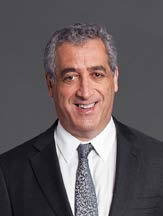
Anna C. Pavlick, DO, MBA, joined Weill Cornell Medicine Meyer Cancer Center in August 2020 as a Professor of Medicine in the Division of Medical Oncology and as the Founding Director of the Melanoma and Cutaneous Malignancy Program. She is also the Associate Director for Clinical Research and Medical Director of the Weill Cornell Medicine-Meyer Cancer Center Clinical Trials Office. She serves on the Clinical Research Leadership Committee and is the Chairman of the Feasibility Review Committee.
Her research focuses upon novel immunologic and targeted therapies for melanoma and rare cutaneous malignancies. She has published on both clinical and translational aspects of melanoma research. Dr. Pavlick has developed an extensive translational, clinical trials program in melanoma which correlates tumor response with biomarkers from serum and tumors. She is also collaborating in the development of the solid tumor cellular therapy service at Cornell.
She serves on several editorial boards and melanoma advisory boards. She has published extensively in peer-reviewed journals and has been an invited speaker
at national and international conferences. As an active melanoma awareness educator, Dr. Pavlick participates in numerous outreach community activities.
Born in New York City, I was raised on the Upper East Side of Manhattan. My earliest birthday recollections are of being given birthday gifts of doctor bags, pills made of sugar, and plastic stethoscopes. You might say my family wanted me to be a doctor; perhaps there was no other path. My grandfather Louis was a cardiologist to the stars, and he looked the part. He dressed in English tweed and sported a white mustache and a pipe. His medical office was on the Upper East Side near my primary school. I would walk there for lunch, and I remember some of his famous patients (e.g., Marilyn Monroe, Barbara Streisand, Alice Neal, and George Peppard). My mother’s father, Ezra, was a World War I veteran, a pharmacist, and an inventor. An old-school pharmacist, he made his
own mixtures and developed a wide patient following. I remember his cough syrup. A few tablespoons of that liquorice-flavored elixir, and there was no thinking of making a cough.
As a young man, my artistic temperament drew me to paint, and write stories and poems. I thought of being an artist, but my family would not have it. Instead, they told me about famous writers and artists who were “doctors first.” Clearly, both being first-generation Americans and having lived through the Great Depression left a mark on their generation. That said, I have never regretted becoming what I consider an artist in medicine. As they say, we all “practice the art.”
Even in medical school, I continued drawing, sculpting, and painting. I published my poems in the medical school literary magazine. However, it all stopped when I discovered ophthalmic research as a creative outlet. Tulane Medical School’s Department of Ophthalmology is where I learned how to create a rabbit model of choroidal melanoma. This involved making a scleral cut-down and placing a plug of hamster melanoma into the suprachoroidal space of rabbits. Once documented to grow, this model of choroidal melanoma was used for external beam microwave hyperthermia treatments.
Searching for a more localized method, I called the microwave engineer Robert W. Paglione at RCA labs in Princeton, New Jersey. Based on my requirements, he produced the first disc-shaped microwave heating antenna for episcleral use. Dr. Samuel Packer collaborated on the project at Brookhaven National Laboratory
in Upton, New York, where I was pleased to see microwave hyperthermia melt away the choroidal melanomas in rabbits. Then, under an FDA investigational device
exemption, 50 patients were successfully treated with combination thermoradiotherapy. I still see 3 of them to this day!
It has been more than 40 years since I started my artistic career in ophthalmic oncology. My advice for young eye cancer specialists is to find those open doors and then walk through them. During your early career, research and write around 10 review articles. That knowledge will humble you; you will learn what we don’t know. If you have an innovative streak, push that envelope for the benefit of your patients. I have been fortunate to have innovated both diagnostic and therapeutic techniques.